

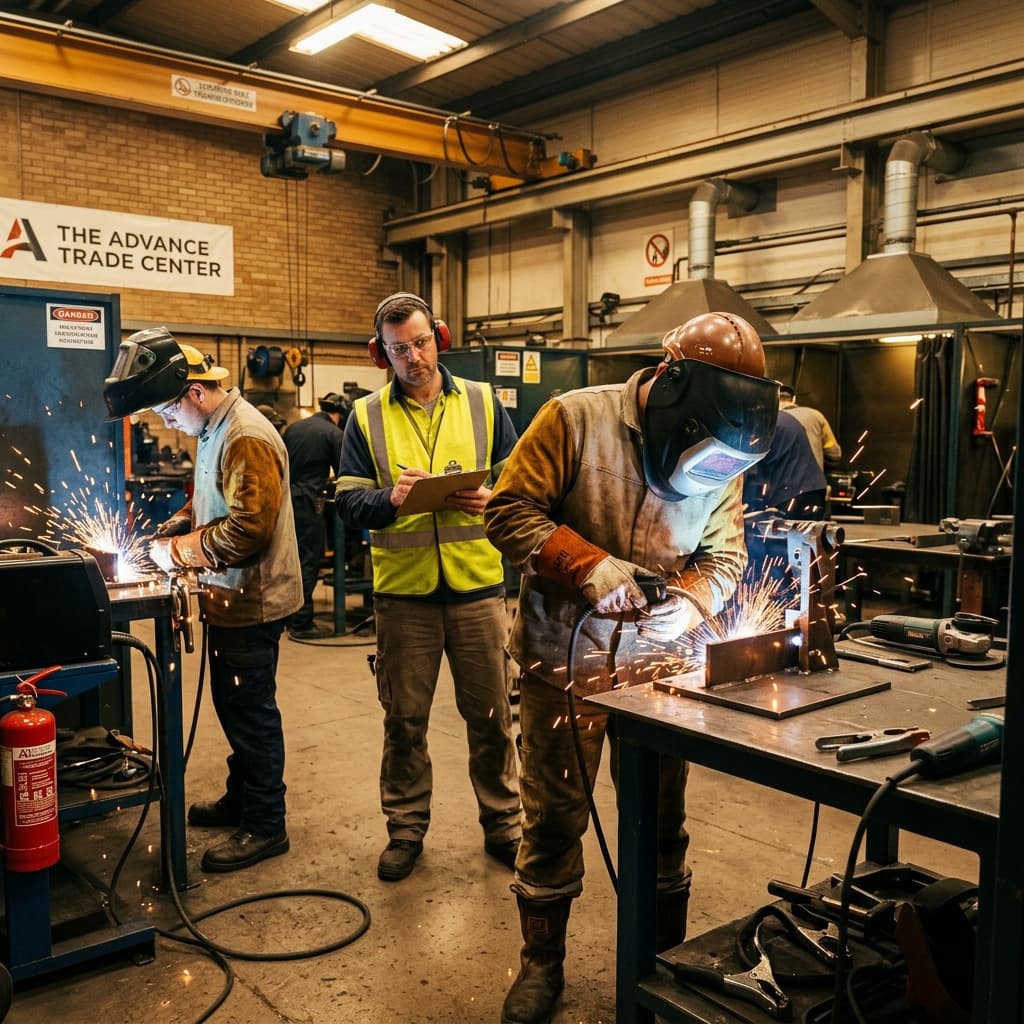
Not every Indian candidate who wants Germany has the two-year qualification and two years' experience the work-visa routes require. For school-leavers and young workers, Germany offers something no other major destination does: a paid, structured vocational programme that ends in a nationally recognised qualification and a near-guaranteed job. It is called Ausbildung, and German employers are now actively recruiting Indian trainees for it.
How the Dual System Works
Trainees split time between a company and a vocational school over two to three and a half years. The company pays a training salary from the first month; the school teaches theory. At the end you sit chamber examinations and receive a qualification that is the standard for the profession across Germany.
Programmes in Highest Demand
- Nursing (Pflegefachkraft) — three years, extremely high demand, leads directly to registered-nurse status
- Electrician, mechatronics, industrial mechanic — three and a half years
- Professional driver — three years
- Hotel and restaurant specialist, cook — three years
- Warehouse logistics specialist — three years
Eligibility
- Completed secondary education (12th standard) — some programmes accept 10th plus vocational school
- B1 German before the visa in most cases, and B2 for nursing in several states
- A training contract with a German company
- Proof of funds where the training salary is below the minimum subsistence figure
Training Salary
Germany sets a legal minimum training allowance, rising each year — over €680 per month in the first year in 2026, and higher under collective agreements. Nursing trainees earn considerably more, often €1,300 to €1,500 gross. Employers recruiting from abroad frequently add accommodation.
The Training Visa
A dedicated residence permit for vocational training is issued for the duration of the programme. Trainees may work up to ten hours a week in addition. After successful completion you can switch to a skilled-worker permit with the same employer or another — and the years count toward permanent residence.
Timeline From India
- German to B1 — six to eight months
- Employer selection and training contract — one to two months
- Visa — six to ten weeks
- Programme start — August or September in most trades
Who It Suits
Candidates aged roughly 18 to 28 with strong school results, motivation to learn German and a long-term plan for Germany. Families should understand the salary is a training allowance, not a full wage, for the first years — but the outcome is a skilled German qualification and a career.
Taha Airwaves places trainees only with employers that provide accommodation support and a written training plan. Register your interest or, for employers, ask about trainee cohorts on the Germany hiring page.
