

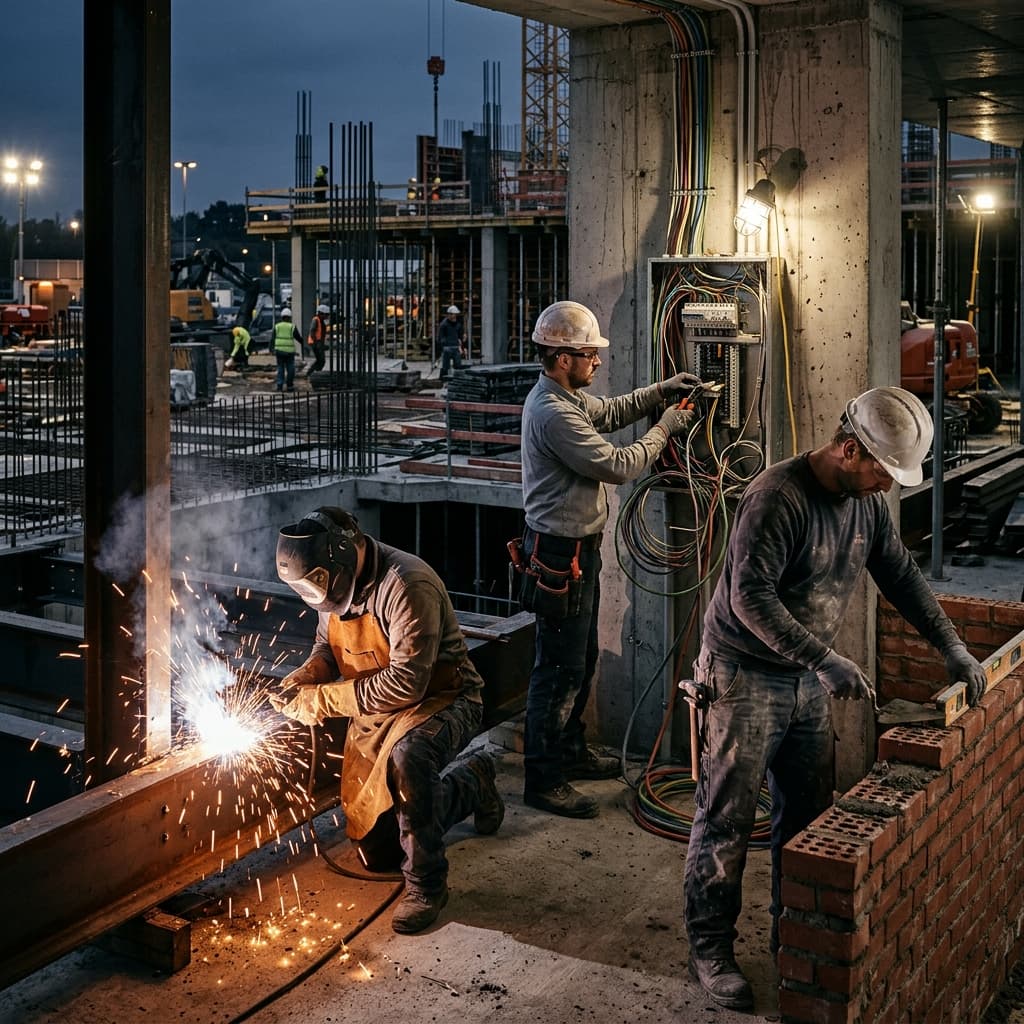
Germany's engineering backbone — the Mittelstand of machine builders, metal fabricators, automotive suppliers and plant constructors — has more open positions for welders and machinists than it can fill from domestic training. Indian metal trades, with ITI training, Gulf industrial experience and ISO-standard certifications, are among the best-matched foreign profiles available.
The Profiles in Demand
- Welders — MIG/MAG and TIG for fabrication, structural and pipe welding; 6G-certified welders for pressure equipment
- CNC operators and setters — turning and milling on Siemens or Heidenhain controls
- Fitters and assemblers — mechanical assembly of machines and plant modules
- Fabricators and sheet-metal workers — cutting, bending and assembly
- Industrial mechanics — maintenance in production plants
Standards That Matter
German employers work to EN ISO 9606 welder qualifications; Indian welders certified to the equivalent ASME or ISO tests transfer well, and re-certification in Germany is a short process the employer usually arranges. For CNC, familiarity with metric drawings, tolerances and control types is tested in our trade tests. We run practical tests in India on the exact processes the German employer specifies and record them on video for review.
Visa Route and Pay
Metal trades are non-regulated, so the experience-based route applies: ITI or diploma of at least two years plus two years of experience, at a wage under the IG Metall collective agreement where the employer is bound, or the FEG floor. Skilled welders and machinists in 2026 earn roughly €2,900 to €3,800 gross per month, higher with shift allowances and in the south-west.
Language
Production floors in international companies run on English in many cases; A1–A2 German is expected for safety instructions and employers commonly fund it after arrival. Smaller family-owned firms may require A2 on entry.
Timeline
Three to four months with pre-approval and the fast-track procedure; five to six without. Batches of five to twenty are typical for a plant.
Recognition Later
Recognition of the Indian qualification by the chamber is not required for the visa but often raises the pay grade; many employers pursue it in the first year.
Drawing Standards and Units
German plants work in metric units with ISO drawing conventions and DIN tolerances. Indian ITI training is metric and ISO-based, so the transition is small; the main adjustment is to German-language annotations on drawings, which employers address with bilingual reference sheets in the first months.
Certification After Arrival
Welders are re-certified to EN ISO 9606 at the plant or a nearby testing institute within the first weeks — a formality for candidates who passed our process-specific tests in India. CNC operators complete machine-specific safety training. Neither delays productive work by more than a few days.
Next Step
Employer requirements are on Indian welders and CNC machinists for Germany. Candidates can apply for oil, gas and industrial vacancies and manufacturing roles.
