

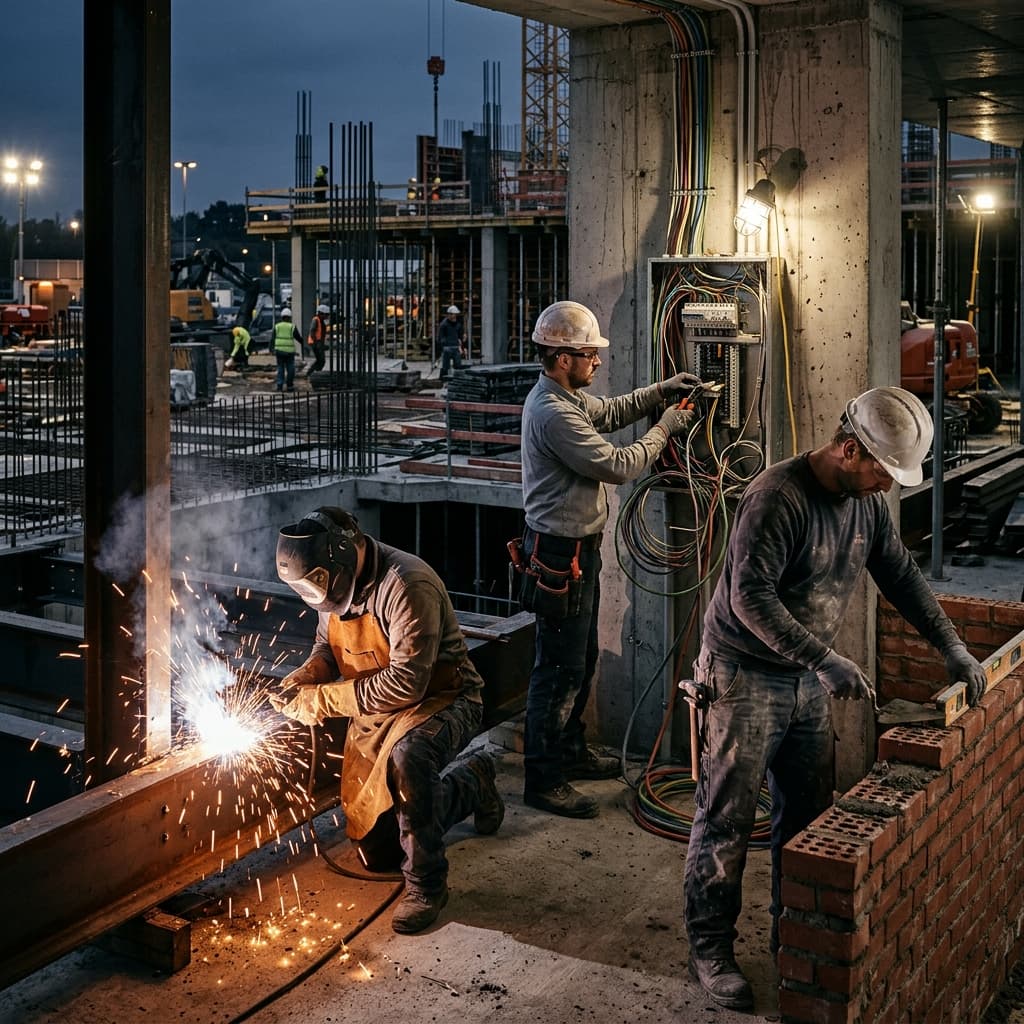
Germany needs hundreds of thousands of additional workers a year, and its reformed Skilled Immigration Act (FEG) — reinforced by the India–Germany migration agreement — finally created routes employers can actually use. The craft is choosing the right one per role.
Route 1: Recognised Qualification
For regulated and formally qualified roles, the worker's Indian credential is recognised against the German equivalent. Strongest route for electricians, mechatronics and care roles — recognition takes time, so start it first.
Route 2: The Experience Route
For non-regulated roles, two years' experience plus a state-recognised qualification (and a salary threshold) admits workers without full German recognition — the workhorse route for welders, CNC machinists, drivers and hospitality staff.
Accelerators That Matter
- Pre-approval (Vorabzustimmung) from the Federal Employment Agency cuts consular time dramatically
- The accelerated skilled-worker procedure via your local foreigners authority compresses recognition and approval
- Complete dossiers — the boring superpower; most German delays are documentation delays
Language, Honestly
Care and guest-facing roles need German (A2–B1); many industrial employers run English-capable floors. We maintain candidate pools at both readiness levels.
Timeline and Costs
Plan 3–5 months end to end. Costs: per-worker recruitment fee, recognition and consular fees, airfare. Deployment runs under Government of India licence B-3260/DEL/COM/100/5/11259/2025 — mandatory on the Indian side. Role-by-role guidance on the Germany hiring page, or send your roles for a route map.
