

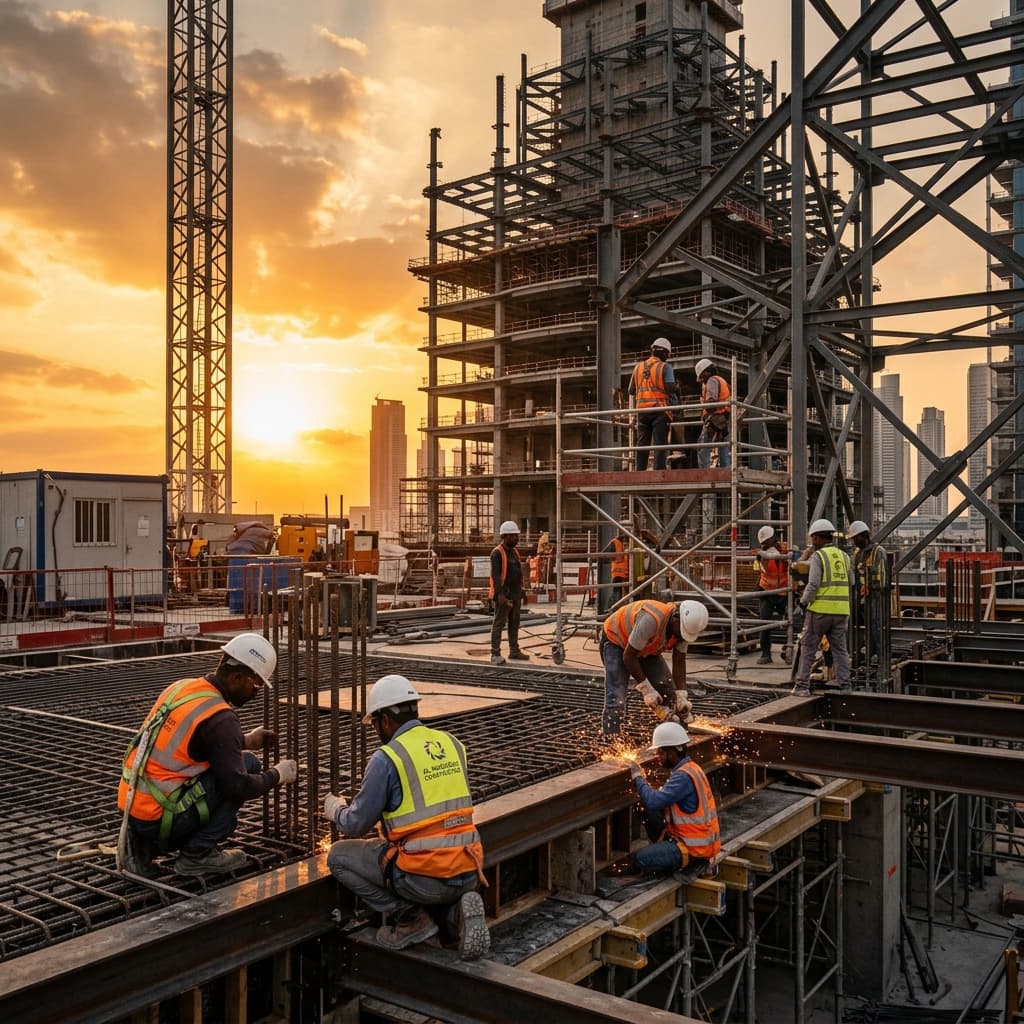
Germany's construction sector has spent a decade unable to find enough workers — housing targets missed, infrastructure programmes delayed, and around 30 percent of firms reporting shortages in early 2026 even in a cooler market. Contractors that once relied on Eastern European crews now recruit further afield, and India has become a serious source for structural trades.
The Trades in Demand
- Masons and bricklayers — housing and commercial shells
- Formwork and shuttering carpenters — infrastructure and precast
- Steel fixers — bridges, tunnels, industrial foundations
- Tilers, plasterers and finishing trades — fit-out and renovation
- Site helpers and general operatives — supporting skilled crews
- Scaffolders and rebar fabricators — often in industrial subcontracting
Indian workers with ITI or NSDC trade certification and Gulf project experience are closely matched to German site expectations: large-scale, safety-driven, deadline-focused.
The Visa Route
Construction trades are non-regulated, so the experience-based route applies — Indian qualification of at least two years plus two years' site experience, at a wage meeting the construction collective agreement. Site helpers without formal qualification are harder to place under the FEG; most employers hire qualified tradespeople and train helpers locally.
Pay Rules Every Employer Must Meet
Construction has its own minimum wage above the national €13.90 floor, and employers must register with SOKA-BAU, the sector's social fund, which administers holiday pay and pensions. Foreign workers on German sites must receive the same collectively agreed conditions as locals — customs authorities inspect sites for exactly this, and non-compliance is a criminal matter. We scope every requirement against these rules before quoting.
Safety and Site Access
Workers need occupational-safety induction, and many large sites require an ID card under the construction industry's identification schemes. Trade tests we run in India mirror German expectations: reading drawings, working at height, tool and PPE discipline.
Timeline and Numbers
Crews of ten to forty are typical. With pre-approval and the fast-track procedure, three to five months from requirement to site is realistic, with batches arriving in stages so supervisors can integrate them.
Seasonality and Programme Fit
German construction slows in the winter months; crews arriving in October may face reduced hours. Contractors get the best value by mobilising crews for the spring start, with the visa process running through the winter. Where winter work continues — tunnels, industrial interiors, precast plants — arrival dates matter less.
Skilled Versus Helper Ratios
A typical Indian crew for a German site is built around a two-to-one ratio of qualified tradespeople to experienced helpers, with helpers holding at least a two-year certificate so they qualify under the FEG. Contractors who need larger numbers of unqualified labour are better served combining an Indian skilled core with locally hired helpers.
Next Step
Full requirements and how we structure a crew are on Indian construction workers for Germany. Read how the experience-based route works in detail in hiring without recognition, or request a crew proposal.
